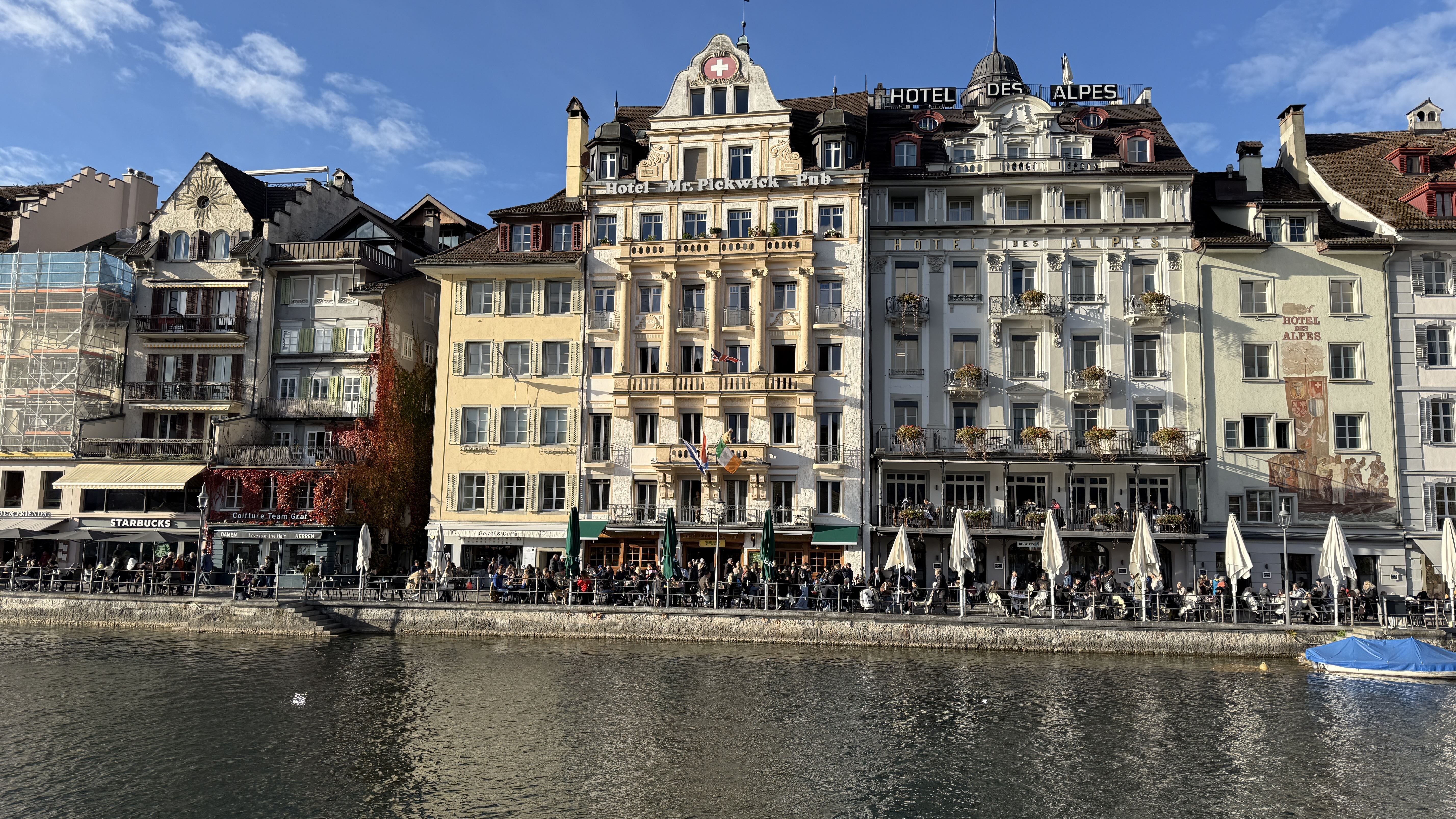
There is a particular kind of travel snobbery that sneers at popular places. Luzern gets a lot of this. It is too pretty, too crowded, too obvious — the Switzerland that Switzerland uses to sell itself to the world. I understand the reflex and I think it is wrong. Some places are famous because they are genuinely, undeniably, almost unreasonably good. Luzern is one of those places.
I have been here four times now. Once by accident (a missed connection that turned into an afternoon), once with a friend who had never been to Switzerland and needed to be shown why it mattered, and twice simply because I wanted to go back. Each time I have stood on the Kapellbrücke and felt the same thing: a quiet, warm satisfaction that this exists and I am standing on it.
"Some places are famous because they are genuinely, undeniably, almost unreasonably good. Luzern is one of those places."
The Bridge, Properly
The Kapellbrücke — Chapel Bridge — is a covered wooden footbridge that dates from 1333, making it the oldest surviving wooden bridge in Europe. It crosses the Reuss at a diagonal, with a detour around the octagonal Water Tower, and its interior roof panels are painted with scenes from Swiss history and the lives of Luzern's patron saints. Most visitors don't look up. You should look up

The bridge was badly damaged by a fire in 1993 and painstakingly restored, with most of the surviving panels reinstated. Walking across it still feels like walking through something genuinely old — the wood underfoot, the low ceiling, the flower boxes along the railings spilling colour over the water. There is a second covered bridge, the Spreuerbrücke, a few hundred metres downstream. Fewer tourists. Grimmer paintings (a Dance of Death cycle from the 1600s). Worth the detour.

The Old Town Without the Rush
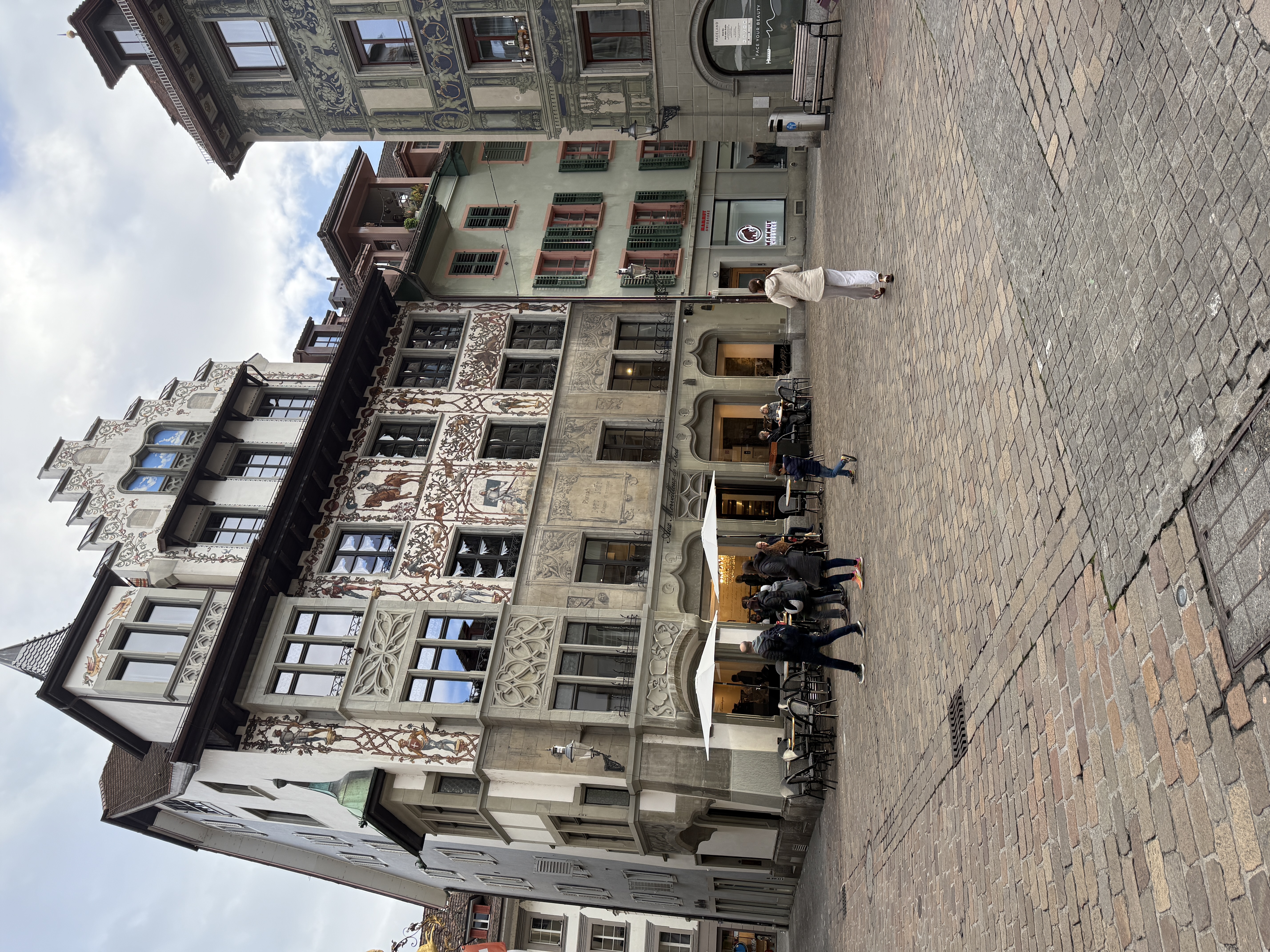
The old town sits on the right bank of the Reuss, a compact tangle of painted façades, fountain squares, and covered arcades. The Weinmarkt square — with its Gothic fountain and ornate guild houses — is one of the most beautiful small squares in Switzerland and somehow gets a fraction of the attention it deserves because everyone is heading toward the bridge.
The rampart walls
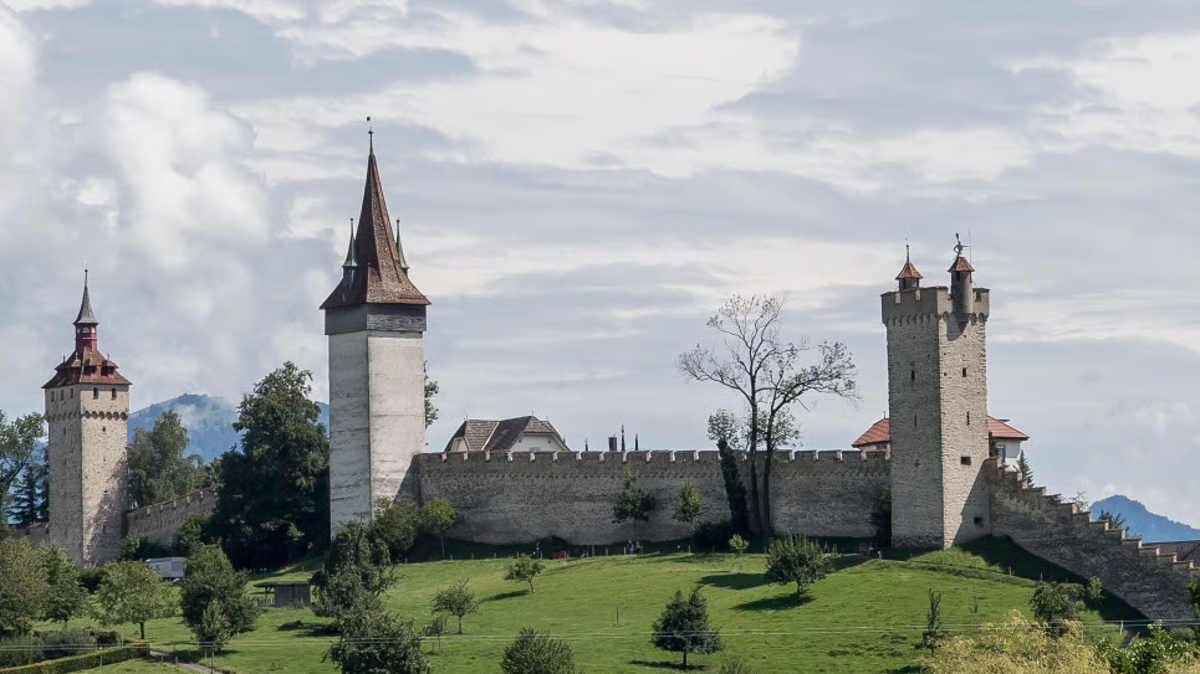
The rampart walls run along the hill above the old town, connecting nine medieval towers. The walk along the top takes about twenty minutes and delivers a view over the terracotta rooftops to the lake and Alps that is one of those moments where you stop mid-stride because the view is simply too good to walk through. Go early. Go on a weekday. The walls are almost always quieter than the waterfront below.
The old town is at its best before 9am and after 5pm, when the bulk of day-trippers and cruise passengers haven't arrived yet. A 7am walk across the Kapellbrücke with the mist still on the water is a genuinely different experience from a 1pm crossing in a stream of tour groups. Both are Luzern. Only one of them feels like yours.
The KKL and the Modern Luzern
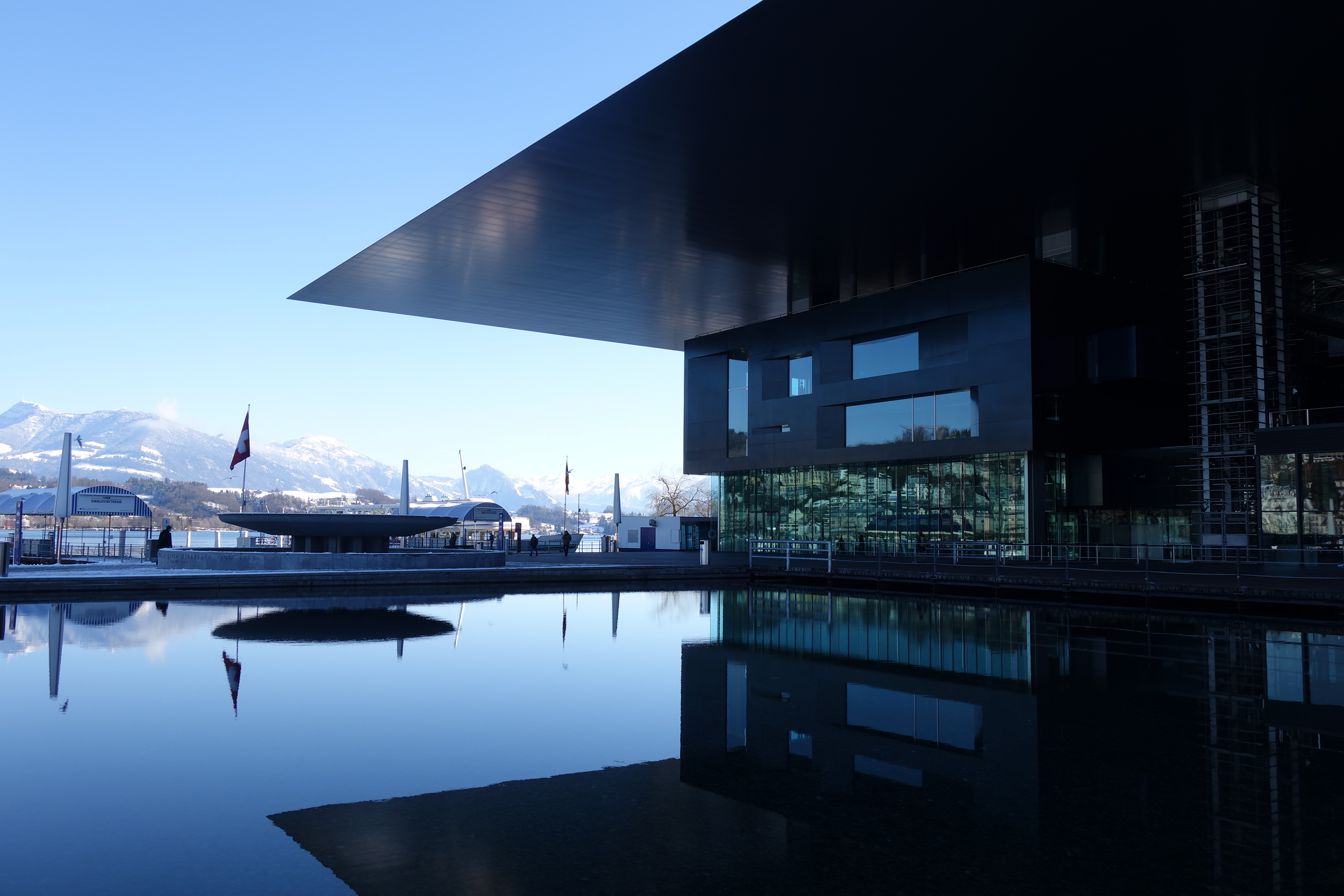
Luzern is not all medieval. The KKL Luzern — the Culture and Convention Centre designed by Jean Nouvel and completed in 2000 — sits directly on the lakefront and is one of the finest pieces of contemporary architecture in Switzerland. Its enormous flat roof projects over the water on slender columns, seemingly levitating above the lake. The effect is strange and very beautiful, especially in rain, when a thin sheet of water runs off the roof edge in a continuous curtain.
The KKL houses a concert hall with near-legendary acoustics (the Lucerne Festival in August draws world-class orchestras for exactly this reason) and a decent modern art museum. But honestly — even if you have no interest in any of that — walk along the lakefront past it and look back. The juxtaposition of the KKL with the old town spires behind it is one of those views that makes you grateful for architects who take risks.
Afternoon Tea at Château Gütsch
Above the city, reached by a small funicular from the old town, sits the Château Gütsch — a neo-Gothic folly of a hotel that looks like something from a fairy tale and has views to match. The terrace café serves afternoon tea, including warm scones with jam and clotted cream, and I am not embarrassed to say that this is now a fixed point in every Luzern visit I make.
The scone matters because it is actually good — buttery, properly risen, not the compressed disc that passes for a scone in most hotel restaurants. But the real reason to go up is the view: the lake laid out below you, the bridge visible from above, the Alps standing guard on the horizon. Sit there for an hour. Order a second pot of tea. The city will still be there when you come back down.
The private funicular to Château Gütsch departs from near the train station — it's free if you're dining or having afternoon tea, otherwise there's a small charge. Reservations for the terrace are recommended in summer, especially on weekends.
Day Trips from Luzern
Mount Pilatus is the classic excursion — a round trip by boat, gondola, and the world's steepest cogwheel railway, with views from the summit at 2,132m that justify every tourist brochure ever written about it. Mount Rigi, across the lake, is gentler and arguably more beautiful in the morning light. Mount Stoos and Brunnen 35 minutes by train along the southern shore of the lake, is where you go when you want Lake Luzern without any of the crowds.
The Pilatus cogwheel railway runs only between May and November. In winter you can reach the summit by cable car from Kriens, but check current schedules — services are occasionally disrupted by snow or high winds. Book the Pilatus Golden Round Trip in advance in July and August.
Where to Eat and Stay
For dinner, the old town restaurants around the Weinmarkt and along the river are reliably good without being remarkable — pick one with outdoor seating by the water and order whatever the daily fish is (the lake trout is usually excellent). For something more interesting, the Bam Bou restaurant near the train station has been doing smart Asian-European cooking for years and is a good break from traditional Swiss menus. For accommodation, the Hotel des Balances on the river has rooms looking directly down onto the Reuss and the old town façades — it is not cheap, but waking up to that view is an experience unto itself.

Abdi is a Somali-Swiss travel writer and Hiker based in Zürich.